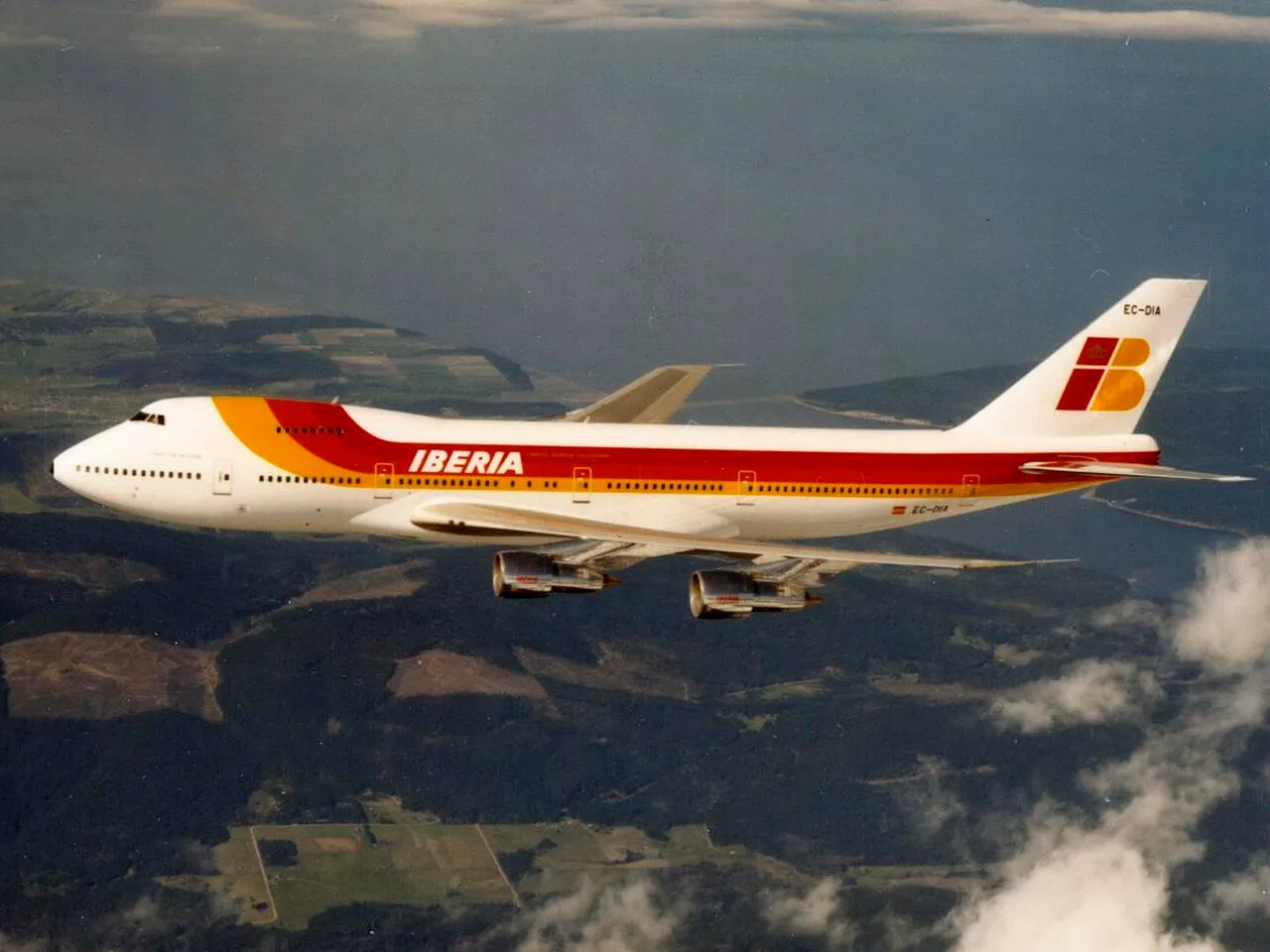
The Boeing 747 is the aircraft that created the wide-body jumbo jet. Boeing Commercial Airplanes built it to meet a Pan American World Airways requirement for a jet two and a half times the size of the 707, to cut the cost of each seat by 30%. It flew passengers and freight for more than five decades, and today it continues mainly as a cargo aircraft, with a small number still flying passengers.
Design and development
Pan Am ordered 25 aircraft in April 1966 for $525 million, and Boeing engineer Joe Sutter, moved over from the 737 programme in 1965, led the design team through what became known internally as “The Incredibles,” working in about two-thirds of the normal development time. Boeing gave the 747 a raised cockpit and the distinctive upper-deck hump so the nose could open for front-loading cargo, a hedge against the belief at the time that supersonic airliners would eventually take over passenger routes and leave the 747 as a freighter. That shape, and the aircraft’s scale, earned it the nickname “Jumbo Jet,” as the first wide-body airliner ever built. The prototype made its first flight on 9 February 1969.
Boeing kept developing the type for decades after launch. Its biggest change came with the 747-400, whose two-crew glass cockpit removed the flight engineer’s station that earlier 747s needed, replacing dials and switches with electronic displays. The -400 also added six-foot winglets that improved cruise efficiency by about 3% and allowed higher cruise altitudes, plus a fuel tank built into the tailplane that extended range by roughly 650 km over the 747-300. The final version, the 747-8, stretched the fuselage again and switched to new General Electric engines, keeping the programme going into its fifth decade.
Specifications
Because the 747 flew in several sizes and weights over 54 years, the figures here describe the 747-400, the most-produced passenger version, with 694 delivered. It measures 70.66 metres long with a wingspan of 64.44 metres; the first 747s were shorter and the 747-8 stretches to 76.3 metres with a 68.4-metre wing. Maximum take-off weight for the -400 reached 875,000 lb, about 397 tonnes, and its range grew to about 7,285 nautical miles, roughly 13,490 km — far beyond the roughly 9,800 km of the earliest -100s. A typical three-class 747-400 seats 416 passengers, cruising at Mach 0.855, about 910 km/h. Across the family, four turbofans power the aircraft: Pratt & Whitney JT9D or PW4000, General Electric CF6 or GEnx, or Rolls-Royce RB211 engines, depending on variant and customer.
Variants
Boeing built the 747 in several distinct generations. The 747-100, the original production model from 1970, sold 167 aircraft. The 747-200 followed in 1971 with more powerful engines and longer range, becoming the most numerous early version with 393 built. Boeing then built a shortened, lighter long-range model, the 747SP, of which 45 were delivered from 1976, and a 747-300 with a stretched upper deck, of which 81 were built from 1983. The 747-400, launched in 1989, became the most popular version with 694 delivered, thanks to its new cockpit, winglets and extended range. The last passenger and freighter generation, the 747-8, entered service in 2011 and found 155 buyers, mostly for its freighter version. Boeing also built dedicated freighter versions throughout the programme, including the 747-200F, 747-400F and 747-8F.
Operators and service
Japan Airlines operated more 747s than any other airline, with 115 aircraft over the years, and the type’s passenger and freight versions flew for major carriers worldwide, including Air France, British Airways, Cathay Pacific, Lufthansa, Qantas and Singapore Airlines. Lufthansa began 747 freighter service in 1972, and by 1982 the active fleet had grown to 542 aircraft, with about 31% of them flying in the Asia-Pacific region.
Passenger 747s have since largely given way to more efficient twin-engine widebodies. Delta Air Lines flew the last scheduled US passenger 747 service in December 2017, and British Airways retired its entire 747 fleet in October 2020. The type remains in cargo service, with a limited number still flying passengers, as freighter demand stayed strong even as passenger orders dried up. Production ended when the final aircraft, a 747-8 freighter for Atlas Air, rolled out on 6 December 2022 and was delivered on 31 January 2023, closing out a 54-year production run that totalled 1,574 aircraft.
Safety record
As of November 2023 the 747 fleet had been involved in 173 accidents and incidents, with 65 hull losses and 3,746 fatalities across more than five decades and over a thousand aircraft in service. The worst involved two 747s: KLM Flight 4805 and Pan Am Flight 1736 collided on the runway at Tenerife in 1977, killing 583 people in what remains the deadliest accident in aviation history.
Similar aircraft
- Airbus A380: the only passenger aircraft to exceed the 747 in size, built to challenge its dominance on long-haul routes.
- Boeing 777: Boeing’s long-range twinjet, which took over many of the 747’s passenger routes as airlines moved to more fuel-efficient widebodies.